01
Digital human model
We use a full-body musculoskeletal model driven by 416 muscles. Fitted to each person's motion capture, it gives the load on every spinal joint. A model of the FIT HV couples onto it like the real device.
AnyMotion Lab and BioDynamics Lab, NJIT
Back-support exoskeletons work less well in real workplaces, because their control gives every worker the same help. We train one adaptive controller in simulation, across many body sizes, loads and lifts, so it adjusts its assist to each worker. Then we run it on a commercial active exoskeleton.
Strains and sprains are the biggest injury category. Musculoskeletal disorders (MSDs) come from repetitive lifting, awkward postures and heavy loads. Public safety reports from one of the largest warehouse operators show how big the problem still is.
57%
of recordable injuries are MSDs.
The 2025 report still says “more than half.”
−43%
MSD rate over six years.
Yet MSDs “remain our primary focus.”
5%
less lower-back force when items are picked between shoulder and mid-thigh height.
Lower-back load is already tracked. An exo lowers it at every lift.
Source: Amazon workplace safety reports on 2023 data, 2024 data and 2025 data.
We judge every lift against the NIOSH spine limit. It is the biomechanical basis of the Revised NIOSH Lifting Equation, a common tool for rating how risky a lift is.
3.4 kN
L5/S1 disc compression that NIOSH uses to define increased low-back injury risk.
Waters et al., Ergonomics 1993
Our models estimate the load at L5/S1 for every lift, with and without the exo.
Which tasks come close to the limit, and how far the exo brings them down.
Ergonomic risk assessments already use NIOSH criteria, so our results use the same measure.
Exos help in the lab, but struggle at work. Lab tests show less back-muscle effort. In real workplaces, three problems get in the way.
In the lab
~20%
less back-muscle activity during lifting, on average.
25% with active exos, 18% with passive. A 2026 meta-analysis of 50 studies (787 people) confirms a modest but significant drop with passive exos. Most testers were young men (~78%).
Kermavnar et al., Ergonomics 2021 (33 studies); Favro et al., Applied Ergonomics 2026 (50 studies); Kazemi et al., Applied Ergonomics 2026 (191 studies)
At work
Rule-based control can jump to a large torque at once. Uncomfortable, even unsafe.
The assist does not change with the worker, the load or the lifting style.
Spine load is rarely measured on the job, so injury prevention is hard to show.
Same support for every lift. Resists walking and sitting, and cannot react to load.
Simple rules (e.g., more help the more you bend), set on a few lab subjects. Ignore who lifts and how heavy.
Fits one person, but takes hours of testing per worker and per task. Too slow for a workforce.
What is needed: one controller that adapts to each worker's size, load and technique, needs no tuning sessions, gives smooth and stable torque, and cuts spine load.
One adaptive controller, built in five steps. We build digital humans that mimic real workers, teach them real motion and real lifts, train the exo controller on them in simulation, then run it on a real exoskeleton.
01
We use a full-body musculoskeletal model driven by 416 muscles. Fitted to each person's motion capture, it gives the load on every spinal joint. A model of the FIT HV couples onto it like the real device.
02
Lab recordings, even a plain video, become reference motions. The digital human learns to reproduce them in physics with its own muscles, so we see how hard each muscle works.
03
The digital human lifts real boxes in physics, with the techniques workers use (full squat, semi squat and stoop), and carries them to a shelf.
04
The digital human wears the exo and adapts to moving with it. One controller learns by reinforcement learning (trial and error), across thousands of worker, load and technique combinations, before anyone wears the device.
05
Our controller drives the FIT HV motors in real time. Next: cohort tests on additional lifting tasks, then real workplaces.
What we have built and tested so far. The human models, the L5/S1 load estimate, exo assist in simulation and live control of the exo motors all work today.
360
lifts from 10 people, on our GPU software.
4 lifting techniques, 9 lifting directions.
r = 0.99
match between our L5/S1 load and experimental measurements.
The same joint the NIOSH limit is set at.
−25%
less lower-back effort with exo assist.
In simulation, same lift with and without assist.
Live
control of the FIT HV motors from our own software.
So a controller trained in simulation can run on the real device.
Exo results are from simulation.
Your data stays with you. Our pipeline can run entirely on your own systems, so no worker or task data has to leave your company.
One possible first step: we share the pipeline, you run it on a few real tasks in-house, and we test the exo on the same tasks, recreated in our lab, before any real-world deployment.
We look forward to potential collaboration.
This project is conducted by the AnyMotion Lab and the BioDynamics Lab at the New Jersey Institute of Technology (NJIT). Both labs combine digital human models with wearable robots.
Studies wearables, exoskeletons and human motion simulation. The lab uses AI, musculoskeletal simulation and wearable sensors to analyze and predict movement, and to design smarter, safer assistive devices.

Lab directorDr. Wei Yin
Assistant Professor, School of Applied Engineering and Technology and Department of Mechanical and Industrial Engineering, NJIT. Research in biomechanics, wearable robotics, exoskeletons, rehabilitation engineering and human-robot collaboration. Ph.D. in Industrial Engineering, Texas A&M University; postdoctoral training at the University of Maryland School of Medicine.
Works on wearable robotics and exoskeletons, computational biomechanics, digital human modeling and personalized medicine. The lab develops smart wearable devices that improve mobility, rehabilitation and physical performance.
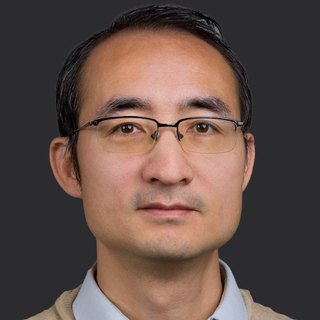
Lab directorDr. Xianlian (Alex) Zhou
Associate Professor, Department of Biomedical Engineering, NJIT. Research in computational biomechanics, human modeling and simulation, robotics, injury prevention and personalized medicine. Before NJIT, over 10 years at CFD Research Corporation as a principal research scientist and manager of its Human Performance and Biodynamics group. Ph.D. in Mechanical Engineering, University of Iowa.
Published work on training exoskeleton controllers in simulation. In each paper, an exo controller is trained with reinforcement learning on musculoskeletal models, then tested on a real exoskeleton.
NatureJun 2024
A hip-exo controller learned entirely in simulation, with no human experiments in training. On a real hip exo, it cut energy use by 24.3% when walking, 13.1% when running and 15.4% when climbing stairs.
arXivOct 2026
A full-body muscle model with varied body sizes, gaits and speeds trains together with a hip-exo controller that is rewarded for lowering muscle energy use. The controller sees only the hip angles and its own past commands. Moved to a real hip exo with no retraining, it cut the energy cost of walking by 18.3% compared with the unpowered device, in all eight adults tested.
arXivSep 2026
One human model learns to walk, turn, run and walk backward, and one hip-exo controller trains with it, so the exo adapts to each skill with no labels or mode switching. On a real hip exo, it worked at four treadmill speeds with six people and guided one person through a route mixing all four skills.
arXivAug 2026
The human model and the hip-exo controller train together in simulation, in stages, then the controller moves to a real hip exo with no per-person retraining. In eight adults, powered assist cut energy use by 19.7% compared with the unpowered device. Extended version of the IROS 2026 paper below.
IROS 2026arXiv, Mar 2026
A four-stage training plan in which the human model and the exo controller learn step by step, then adapt to each other. In simulation, hip muscle activation fell 10.1%. On a real hip exo with five people on a treadmill, it gave mostly helpful (positive) power.